The Experts

Simon Bond
Shares Expert
+ About Simon Bond

About Simon Bond

Simon is 48 years of age and has been in the investment world almost all his life.

His father Bruce Bond was a pioneer in the world of personal financial advice and appeared as a regular in a large number of publications and the electronic media over a number of decades. His success and following gave rise to many of the financial journalists that are now heard around the nation on so many different programs and various formats.

Bruce was a trusted and respected member of the investment community and Simon has followed in his father’s footsteps.

Simon is a Partner at the Newport Office of ABN AMRO Morgans Australia, after having spent almost two decades learning his trade in the heart of stockbroking in Melbourne's Collins Street at various firms.

He relocated his family back to Sydney for family reasons around five years ago, coming almost full circle, having begun his career in the 70s as a “chalkie” at the Sydney Stock Exchange

Simon is fanatical about the way that technology and the internet is altering the investment landscape around the globe and focuses much of his outlook on how these profound changes will affect the outcomes and futures of investors everywhere.

Budget comment: Swan song?

Thursday, May 16, 2013

We all know that in a perfect world, income would rise so that we could afford whatever we wanted to spend. However, most of us have learnt that in the real world, we have to reduce our spending to no more than our income. That is how we balance our budget.

The Treasurer has told us that incomes did not rise as rapidly as he hoped. He therefore blames incomes for the reason he could not balance his budget. Let us look at perhaps what the rest of us might have thought was the reason for the budget deficit.

In Chart 1 below, we see payments of the Australian Government General Government Sector as a percentage of GDP. This is drawn from Table 1, page 10-6 of Budget Paper No.1. In the period of the previous government, payments fall from 25.1 per cent of GDP in 2000/2001 to 23.1 per cent of GDP in 2007/2008. This is the level of spending when Wayne Swan first strode to the Treasury benches.


Spending will never be as low again as it was in 2007/2008. Over two years to 2009/2010 it rose to 26.1 per cent of GDP. Only then did it peak. It then began to decline. In 2013/2014, it has declined to 24.5 per cent of GDP. This is still 1.4 per cent of GDP higher than it is when Wayne Swan took office in 2007/2008. The result is that in 2013/2014, Wayne Swan produces a deficit of 1.1 per cent of GDP. If spending was the same as in 2007/2008, the result would instead be a surplus of 0.3 per cent of GDP.

It is important to note that even out in the distant year of 2016/2017, spending is still estimated to be 23.8 per cent of GDP. This is still 0.7 per cent higher than it was in 2007/2008.

In Chart 2 below we see the underlying cash balance as a percentage of GDP for the General Government sector. This budget deficit peaks when spending peaks. It peaks at 4.2 per cent of GDP in 2009/2010. As spending declines, the budget deficit improves. Out in 2015/2016 when spending falls to 24.0 per cent of GDP, the budget is forecast to actually return to balance. When it falls a little further in 2016/2017 to 23.8 per cent of GDP, the budget is forecast to move into slight surplus. In the real world, we balance our budgets by reducing our spending.


Where the Money went

Total spending by function contained in this budget is shown in Table 1 below. The budget for 2013/2014 for the Australian General Government sector will spend $398.3 billion. Overwhelmingly, the largest area of spending is Social Security and Welfare. This is 34.7 per cent of total spending. In relative terms, Social Security and Welfare spends slightly more than six times as much as Defence. The next major section is Health, which spends $64.6 billion. This is 16.2 per cent of total spending. Still, this is less than half as much than we spent on Social Security. Education comes next with $29.7 billion of spending. This is 7.5 per cent of the total. This is less than a quarter of the amount that is spent on Social Security. Still, it is almost 40 per cent more than is spent on Defence.


Defence comes next with $22 billion of spending. In the Treasurer’s speech, he made some discussion of Transport spending. In fact, Transport and Communication sees spending of a relatively small $6.5 billion or 1.6 per cent of total spending. Just as Social Security and Welfare sees the biggest absolute spending, it also sees the biggest absolute increase in spending. Increases in spending by function are shown in Table 2 above. Social Security and Welfare sees increases in spending of $6.5 billion. This increase is equal to the total that is spent on Transport and Communication.

Health sees an increase in spending of $3.6 billion. Household and Community Amenities sees an increase in spending of $1.5 billion. Transport and Communication sees an increase in spending of $1.4 billion.

Economic Outlook

What is remarkable about the spending above is the kind of outlays that you would increase if you thought you were going into a modest recession. We have said below that Australia is in fact in a “growth recession”. A growth recession is what occurs when employment growth is growing too slowly to take up the growth in the labour force. The result is that unemployment rises.

This is exactly the scenario which page 1-8 of Budget Paper No. 1 tells us that we facing in the year ahead. We are told that growth will slow from 3 per cent in 2012/2013 to only 2.75 per cent in
2013/2014. The result of this is that unemployment rises from 5.5 per cent to 5.75 per cent. This is a forecast for a growth recession.

Unemployment stays high at 5.75 per cent in 2014/2015. Growth picks up to 3 per cent but this is only enough to stabilise unemployment at a higher level. This is why we need high Social Security and Welfare spending. This is why we need higher public housing spending. It is to support higher unemployment during a period of growth recession.

Conclusion

It is apparent from the numbers published in Budget Paper No. 1 that the real problem with the Budget Deficit was spending, not revenue. Had the Budget for 2013/2014 reduced spending to the same level as 2007/2008, then the Budget would be in slight surplus.

The Economic Outlook published with the Budget provides us with a warning. Australia will continue in a growth recession with unemployment slowly rising. In that environment next year’s Budget will provide even greater challenges than this.

| More


Depleting our own value

Thursday, May 09, 2013

Great fortunes are being made on shrinking the economy rather than growing it.

Instagram got sold for a great fortune not because it only had 13 employees but because it’s value comes from the millions of users who contribute to the network for no return.


The situation reminds me a little bit of something that is deeply connected, which is the way that computer networks transformed finance. You have more and more complex financial instruments, derivatives and so forth, and high frequency trading, all these extraordinary constructions that would be inconceivable without computation and networking technology.

At the start, the idea was, “Well, this is all in the service of the greater good because we'll manage risk so much better, and we'll increase the intelligence with which we collectively make decisions.” Yet if you look at what happened, risk was increased instead of decreased.


So what are we doing about it?

If you’re 28 years old, with two university degrees, and your parents have invested all their money in your education, and you’ve done everything that was expected of you: if society then tells you, ‘sorry, we don’t have a job for you’, then it’s easy to understand why people revolt. We have to give young people hope.  In Europe, the world’s richest continent, there has to be a place for young people, damn it!

With these words Martin Schulz President of the European Parliament, describes the heart of the problem.

How Germany beats the youth unemployment trap

The "dual" vocational training system used to be derided as limiting university degrees. Now it is being lauded in the U.S., and exported to struggling southern European countries. 

BERLIN - Over five and a half million young Europeans are without jobs. In the crisis countries in southern Europe, a generation is coming of age with few prospects: one in two Spaniards and Greeks under 25 are unemployed, and it's one in three in Italy and Portugal. To them, Germany must look like an island of the blessed: youth unemployment here is below 8 per cent.


In no other of the 27 EU member states is it this low. Only Austria is anywhere close (8.9 per cent).

How do they do it, their European neighbors ask – and even make pilgrimages to Germany to research the phenomenon. What they discover is dual vocational training system – going to school (theory) and working (practice) simultaneously rather than consecutively. For most Europeans, that’s new: learning and working, instead of learning then working.

The European Commission has praised the German model as a "guarantee against youth unemployment and shortage of skilled labor." Even U. S. President Barack Obama praised the German model in his 2013 State of the Union address: “Right now, countries like Germany focus on graduating their high school students with the equivalent of a technical degree from one of our community colleges, so that they're ready for a job.”


For a long time, other countries criticized Germany for this approach – in fact, the OECD regularly upbraided us for having too few university graduates. For many international education experts, a university education -- bachelor or master’s degree, doctorate -- is the measure of all things. German “Meister” (master) certification is seen as rather exotic.

Practical training is considered to be notches below academic training. Equating an apprenticeship diploma with a high school degree, considering master certification to be on a par with a bachelor’s degree, is inconceivable for many Europeans. But slowly, word is getting around that German industry’s ability to innovate -- and indeed its success as measured by the success of its products worldwide -- might have something to do with the sound training German workers receive.

| More


A fool’s paradise

Wednesday, May 01, 2013


Helicopter money dropped into the market looking for a home. When shopping for unneeded items is the primary form of exercise for a large portion of our population we need to re assess our priorities. 


Why are people so keen to cheer on lower interest rates? Lower rates also mean declining economic activity in many parts of the country. 


Whilst low inflation figures allow the Reserve scope to cut interest rates there are some flipsides. It also means that unemployment must be rising and demand slowing, retirees are certainly not happy with low interest rates especially when they rely on their income to live on, lower rates means that they are forced to eat into their capital to continue to fund their own retirement. 


Sure mortgage rates also come down, but who is able to afford to pay the mortgage if you have no job and no income. 


Whilst all those traveling overseas to new and exotic destinations are having the time of their lives, in the background Australia’s strong currency continues to undermine our competitiveness. 


The recent jump in unemployment to 5.6 per cent is still low compared to somewhere like Spain where the rate is hovering around 27 per cent but it is now our highest rate since the aftermath of the financial crisis in 2009. Over the past 2 years the Australian dollar has traded 35-40 per cent higher than it’s long term average. The AUD has now traded above parity with the US dollar for the longest time since it was floated in 1983. 


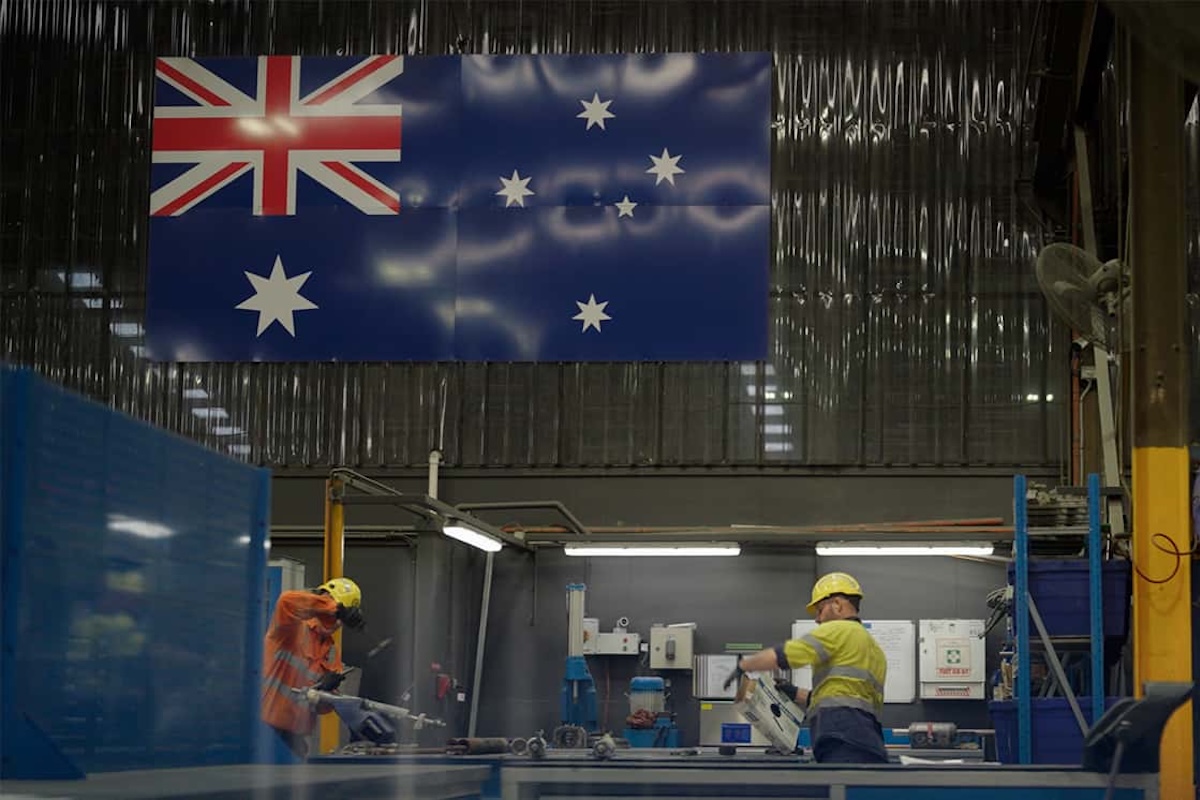
Holden recently announced that due to the higher currency they were cutting a further 500 jobs. In fact manufacturing’s share of the Australian economy has fallen more then 40 per cent over the past decade, 20 per cent over the last 2 years and 2 per cent in the fourth quarter of 2012. 


A recent Wall Street Journal estimate, and World Bank data suggest that manufacturing now represents a smaller share of Australia’s economy than in any other OECD nation. 


Looking at all nations listed by the IMF as advanced economies, manufacturing is as low a share of GDP only in Cypress and Luxembourg.

Competitive destruction from the strong currency has seen the end of such icons as Rosella, Darrell Lea, Angus and Robertson and Allan’s Music not to mention the others that have fallen into the hands of multinationals. 


The calls for interest rate cuts get louder as the job losses mount, but by then it’s too late and the strong dollar is killing off industries that once gone will never return. 


A new Deutsch Bank survey noted that a weekend vacation to Sydney has become the world’s most expensive, twice as much as a visit to New York. 


The string Australian dollar has played a big part in moving Australia into the realms of one of the most expensive cities in the world to live. Costlier than New York, London and now Singapore. 


Fuel prices are 71 per cent higher than in the US and 41 per cent higher than those in China and rents in the CBD Are higher than New York, Berlin, Shanghai and Toronto.

| More


Deflation rules OK

Thursday, April 18, 2013

“The unemployment rate rose to a higher-than-expected seasonally adjusted 5.6 per cent in March from 5.4 per cent in February”. 


Economists had expected an unemployment rate of 5.4 per cent in March.

The number of people employed fell 36,100, compared with an expected drop of 10,000, the Australian Bureau of Statistics said. 

The number of people in full-time work fell 7400 to 8.1 million in March, while those in part-time work fell 28,700 to 3.5 million. 


The bureau said its seasonally-adjusted workforce participation rate, or the proportion of working-age people at work or actively seeking work, fell to 65.1 per cent in March from 65.3 per cent in February and a consensus expectation of 65.2 per cent.?

The unemployment data released last week was a surprise? A surprise? A surprise to who? 

What planet are these guys living on? Do they not go out. Do they not shop? Do they not have children trying to enter the workforce? 

Who are these people? 

Do they not see how the retail market is faring? Do they not see how online is taking over? Do they not see the deflationary impact of technology? Do they not see that interest rates in Australia have been kept too high for too long? Do they not see that every man, woman and their dog is going overseas to spend their money? Do they not see how areas of local tourism such as Port Douglas and other areas of Queensland have fallen victim to the cheap air fare to Phuket, Honolulu, Bali and the like? 

Do they not see that every effort to drive some inflation into the market by the US or Japanese authorities has so far been futile? 

Do they not see how price deflation has been encouraging people to continually wait on their purchase decisions as each day prices fall in order to meet the market? 


Just down the road from us is a Coles supermarket. Just this week they have installed another bank of self service checkouts. There goes another 5 jobs, at least.

And there will be more, and more.

| More


S&P 500 almost fair value

Friday, March 15, 2013

The S&P500 is almost fair value.

Since the fourth quarter of 2008, fundamentals of the US equities market have seen a dramatic transformation. Back in that quarter, operating earnings-per-share were actually zero. By the fourth quarter of 2009, operating earnings had risen to $US17.16 per share. By the fourth quarter of 2010, they had improved to $US21.93 a share. By the fourth quarter of 2011, they had risen again to $US23.73 a share.

That is where the growth stopped. Over the past year, earnings have actually eased to $US23.14 in the fourth quarter of 2012. In spite of this flat level of earnings, equities markets have roared dramatically upwards. This improvement in values has not been because of earnings growth but because of a decline in the equity risk premium.

The equity risk premium has declined with the decline in equity market volatility. Equity market volatility has declined as markets became more liquid at the end of an extended period of US and European banking crises.


In Chart 1 above, we see our updated model of the S&P500. Our model is based on operating earnings for the period since March 1988. This, together with 10 year bond yields, allows us to assign an appropriate value for the S&P500.

We can see how the market vastly overshot our concept of fair value during the tech boom of the 1990’s. Still, after the tech crash that followed, the S&P500 followed a path remarkably close to where our model suggested from 2002 to 2009.

The past three years saw a remarkably divergence. During this time, the model continued to rise. This reflected improving earnings. The equity market lagged this improvement in fundamentals out of fear of the volatility that accompanied successive banking crises. Now the market is confident these banking crises are behind us. The market is finally catching up with fair value suggested by this higher level of earnings.

Our model tells us that based on the current level of earnings, fair value of the S&P500 is 1605 points. This was still 49 points higher than the level of the S&P500 on 12 March of 1556 points.


In Chart 2 above, we see our overbought/oversold indicator for the S&P500.

This shows us the difference between our model estimate of the S&P500 and the actual traded level. The difference between the two is shown in standard errors.

We can see that the S&P500 has been consistently in undervalued territory for the past three years. The major recovery towards fair value has only been in the past six months. On 15 March the level of undervaluation has fallen to 0.05 standard errors. Statistically this still gives the market a 52 per cent chance of going up.

Closer examination tells us that the difference between the market and our model is not exactly normally distributed. The actual performance of the market between 2003-2009 suggests that it actually spends much of its time in slightly over-valued territory. So it is possible that the market might modestly overshoot our model and stay there for a while.

Still, the most likely scenario is that the most dramatic period of stockmarket rises is coming to an end. Projected earnings-per-share growth for the S&P500 is only around 10 per cent (see footnote). Once the market has caught up to fair value, then its rate of rise will be limited to that improvement in earnings.

There is still further upside to the market but the rate of increase may be slower than we have seen.

Conclusion

Recent months have seen a sharp up-move in the S&P500. The market has risen to near the level suggested by operating earnings. We think fair value is 1605 points. Once it has reached that level, then the path of recovery will be limited by future growth in operating earnings.

There is still further upside to the market but the rate of increase may be slower than we have seen.

| More


White winged dove

Friday, March 01, 2013

Recently there has been more discussion and chatter about who will replace Ben Bernanke when his term comes to an end in January 2014.

The Vice Chair of the US Federal Reserve is Janet Yellen Yellen and is considered by many on Wall Street to be a "dove" (more concerned with unemployment than with inflation) and as such, to be less likely to advocate Federal Reserve interest rate hikes.


She sits at the top of the list as far as replacements are concerned and she ticks all the Obama boxes. 


She was chairwoman of the White House Council of Economic Advisers and a member of the Fed's Board of Governors in the Clinton administration. A Brooklyn native who received her Ph.D. in economics at Yale, Ms. Yellen has taught in the Haas School of Business at the University of California, Berkeley, since 1980. She was a member of the Fed board from 1994 to 1997 and then chairwoman of the White House Council of Economic Advisers, from 1997 to 1999, under the Clinton administration. Ms. Yellen's husband, George A. Akerlof, is a Nobel Prize-winning economist who also teaches at Berkeley.


So it is therefore important to take note of her views and policy expectations. At a recent speech she noted, with inflation currently running below the Fed’s 2 per cent inflation target and expected to remain low in coming quarters, a focus on helping the job market is “entirely appropriate,” Fed Vice-Chair Janet Yellen told a conference sponsored by the AFL-CIO labor union.


“We have our foot, not only on the gas, but really pressed to the floor in terms of trying to get this economy moving,” Yellen said.
The Fed has committed to hold short-term interest rates close to zero as long as the unemployment rate remains above 6.5 per cent. Yellen said that the Fed might not act even if this threshold is crossed.


The 6.5 per cent rate is not a trigger, she said. If the threshold is crossed, “action is possible but not assured.”


Yellen said several factors that usually help the economy after a recession are now holding it back: fiscal policy, housing, and household expectations of future income growth.


While Yellen expressed relief the government avoided the so-called fiscal cliff, she pointed out negotiations still continue on the so-called sequester that may be reached in March. “I expect that discretionary fiscal policy will continue to be a headwind for the recovery for some time, instead of the tailwind it has been in the past,” she said.

In her speech, Yellen said that the Fed felt it needed to act to bring down the jobless rate because of the devastating impact that long-term unemployment was having on American workers and their families.


This translates to me that the Fed will potentially consider a higher inflation rate as long as the unemployment remains stubbornly high. This says that we are in a low interest rate policy setting for quite some time to come.


Last week the details on estimates of inflation were released to the market by the Cleveland Fed. The chart below says it all, authorities believe that we are in a low inflation environment for many years to come.


The Federal Reserve Bank of Cleveland reports that its latest estimate of 10-year expected inflation is 1.53 percent. In other words, the public currently expects the inflation rate to be less than 2 percent on average over the next decade.

In a nutshell low interest rates in the US will be here for longer than many people realize. Even if we see a tick up in the inflation rate as long as unemployment stays at the upper end rates will stay at the lower end.

| More


Blown to bits

Thursday, February 21, 2013

Since the results season has been underway we have noted that the market capitalizations of Real Estate.com, Seek.com, Car Sales.com, Webjet.com.au and Wotif.com have continued to move forward. 


Today alone following the result of Seek.com the share price has advanced by 8% just in one day to a recent price of $9.50 which gives the company a current market capitalization of 3.2 billion dollars. 


The previous owner of the spaces, as in Fairfax Ltd, has a current market capitalization of 1.28 billion.

We have discussed this before but lets again look at the combined market caps of Fairfax’s “competitors” in each relevant space. 


RealEstate.com 3.3 billion
Seek.com 3.2 billion 

CarSales.com.au 2.1 billion 

Webjet.com.au 380 million 

Wotif.com 1.2 billion

Total 10.18 billion
Fairfax 1.28 billion

What an opportunity that has been lost to the entrance of the new arrivals. 


Fairfax had first mover advantage and this has not just been squandered it has been blown to bits.

In previous articles we have focused on the laws of subtraction, I.E, Doing something isn’t always better than doing nothing. 


Innovation often demands taking a break from the rigors of work. Neuroscience now confirms that the ability to engineer creative breakthroughs indeed hinges on the capacity to synthesize and make connections between seemingly disparate things. A key ingredient is a quiet mind, severed for a time from the problem at hand.

Business leaders today face endless choice and feature overkill. They need to cut through the noise, using the art of subtraction to reveal the quiet truth. When you remove just the right things in just the right way, good things happen. 


In the pursuit of innovation, leaders are often faced with three critical decisions: what to follow versus what to ignore, what to leave in versus what to leave out, and what to do versus what not to do. 


Many of the most original innovators tend to focus far more on the second half of each choice. They adopt a “less is best” approach to innovation, removing just the right things in just the right way in order to achieve the maximum effect through minimum means and deliver what everyone wants: a memorable and meaningful experience.

It’s the art of subtraction, defined simply as the process of removing anything excessive, confusing, wasteful, hazardous, or hard to use—and perhaps building the discipline to refrain from adding it in the first place. 


That is why the newcomers have been so successful.

| More


What's up?

Wednesday, February 13, 2013

“One of the tests of leadership is the ability to recognize a problem before it becomes an emergency”. Arnold H. Glasgow.

A McKinsey survey out this week suggested that today’s youth are 3 times more likely to be unemployed than their parents.

Translation – Continued weakness in the labour market, more part time jobs.

My view is that the Industrial Revolution is now the Digital revolution.


Translation – you cannot cost cut your way to growth on a sustainable basis, sooner or later you run out of costs to cut.


How Big Data, Cloud Computing and Artificial Intelligence are combining to eliminate jobs and make businesses more efficient. Now, the three technologies are combining to eliminate jobs and make businesses more efficient at an accelerating rate. 


Translation – Deflation, as people continually wait for lower prices as software also replaces jobs, RBA needs to keep it’s powder dry for the future but will look to cut again, their concern is that the liquidity flowing through the world due to ongoing reflation attempts may create bubbles in some asset classes due to liquidity rather than fundamentals.


Presently, nearly all jobs disappearing pay middle-class wages, ranging from $38,000 to $68,000, according to a recent AP/Washington Post analysis. In the U.S., half of the 7.5 million jobs lost during the Great Recession paid middle-class wages, while the 17 European countries using the euro lost 7.6 million mid-pay jobs from January 2008 through June 2012. Machines and software that can do the work better for a fraction of the cost have likely permanently replaced the vast majority of the lost jobs.

Translation – Governments will continue to stimulate until they see growth pick up, in any economic environment there are still some businesses that do well.


Advancing technology is poised to steadily move up the pay scale, eliminating more highly skilled workers. Examples are proliferating where big data, cloud computing and AI are boosting profit margins and efficiency, setting the stage for leading technology providers in each sector to have the wind at their backs for decades.

The U.S. unemployment rate continues to hover near 8 per cent, with nearly 40 per cent classified as long-term unemployed, or, in other words, jobless for 27 weeks or more. An additional 5 per cent work part time, but want to work full-time, according to the CIO Journal. 


A growing proportion of persistent unemployment is being attributed to improving technology, with machines and software becoming more powerful, creative and easier to use.

This has made consumers increasingly comfortable relying on it in transacting business, eliminating jobs of bank tellers, ticket agents and checkout cashiers. In the U.S., between 2000 and 2010, over 1.1 million administrative-assistant positions disappeared from the job market, as software let employers field calls themselves and organize meetings and trips. 


The number of telephone operators fell 64 per cent, word processors and typists declined 63 per cent, travel agents dropped 46 per cent, and bookkeepers declined 26 per cent, according to the U.S. Labor Department.

Maarten Goos of the University of Leuven in Belgium calculates two-thirds of the 7.6-million middle-class jobs that disappeared in Europe were due to technology. Big data analytics software is a key enabling technology, because software can sift through data to identify trends faster than humans with greater accuracy. 


For example, Wal-Mart collects 50 million filling cabinets worth of information every hour from its dealings with customers, and a recent Wal-Mart analysis of Twitter traffic led it to increase the amount of “Avengers” merchandise it offered when a new sequel of the superhero movie was released last year. Likewise, Google’s self-driving automobile can only drive by itself by accessing Google’s large collection of maps and analyzing enormous amounts of data from special sensors to negotiate traffic. 


Martin Ford, author of The Lights in the Tunnel: Automation, Accelerating Technology and the Economy of the Future, recently warned: “What is less visible, is that organizations are collecting huge amounts of data about their internal operations and about what their employees are doing.” In his view, computers can use the information to increasingly “figure out how to do a great many jobs” currently done by humans. 


Translation - New world order.

Cloud computing is having a profound impact as well. Five years ago, businesses that needed to track a lot of data would have to install servers at their offices and hire technical staff to operate them. But, now, the information can be stored on the Internet, using services such as Amazon Web Services or Google App Engine, allowing businesses to access the information on demand from multiple devices. The advent of cloud computing is particularly attractive for smaller businesses, which don’t have big technology departments. 


For example, Hilliard’s Beer in Seattle uses cloud software from SAP AG to track sales and inventory, as well as produce required reports for federal regulators. Hilliard’s is consistently finding new applications for the software, most recently using it to track what happens to the kegs it delivers to restaurants, allowing it to retrieve them sooner for reuse. “It automates a lot of the stuff that we do,” says owner Ryan Hilliard. “I know what it takes to run a server. I didn’t want to hire an IT guy.” Similarly, Automated Insights in Durham, N.C. uses cloud software to produce automated sports stories. “We’re able to create over 1,000 pieces of content per second at a very cost-effective rate,” notes founder Robbie Allen. Additionally, artificial intelligence software is increasingly becoming embedded, even in simple devices. 


The Google Now personal assistant can tell you about a traffic jam on your regular route home, suggesting an alternative, while Microsoft has unveiled a system that can translate what you say in English into Mandarin, playing it back in your voice. Companies are using these technologies to streamline operations: Facing a 50 per cent cut in its annual transportation budget, Gary, Indiana’s public school system used sophisticated software to develop new efficient bus routes, enabling it reduce the number of bus drivers from 160 to 80.

Standard Chartered bank in South Korea is expanding its “smart banking” branches that only employ three people and closing traditional branches, which employ an average of eight employees. At “smart banking” branches, customers do most of their banking on computer screens, connecting to specialists located elsewhere by videoconference if needed. So far, the bank has closed a dozen full-service branches, replacing them with smart branches, and expects to open 30 more by yearend. 


A Netherlands furniture-making company only needs four people because it prints the furniture with a 3D printer using plastic recycled from old refrigerators. Prices range from $300 for a chair to $3,000 for a lamp.

Rio Tinto is building the world’s first long haul, heavy-duty driverless train system for $518 million at its Pilbara iron-ore mines in Western Australia. The trains will become operational next year, and are part of Rio Tinto’s “Mine of the Future” program, which includes 150 driverless trucks and automated drills. EBay used its big data analytics expertise from its auction business to analyze every single asset and component of its business to increase efficiency. 


A U.S.-based retail bank uses social-media activities to identify at-risk customers, while an Asian bank analyzes customer-call audio logs to identify insights into their service quality. The methodologies capture firsthand feedback and avoid bias of customer surveys, enabling development of better customer and performance targets.


Macy’s uses big data to create customer-centric assortments, and analyzes sell- through rates, out-of-stocks and price promotions at the product or SKU level. The approach enables it to generate thousands of scenarios to gauge the probability of selling a particular product at a certain time and place, and optimizing assortments by location, time, and profitability.

Netflix takes all of its customers’ viewing habits and movie ratings, and uses a sophisticated algorithm to generate a 5-star recommendation system tailored for each subscriber.

| More


It just is

Friday, February 01, 2013

“Work spares us from three evils, boredom, vice and need”. Voltaire.

Sadly though many jobs and professions are becoming obsolete, if you think what you are doing is special or unique you may in fact be in for some big shocks, for as we speak, right now computer algorithms are running on servers all over the world looking to do what you can do, but only better.


These programs predict weather, habits, earthquakes, financial decisions, the outcomes of war and many many more.


Last year in an official employment report the US Government released a report saying that 117,000 jobs had been created during the month, this reality masked the fact that every month in the US there is population growth of 130,000 people. The official unemployment rate was pegged at 9.1% but when you consider that 8.4 million people were part time workers and that 1.1 million had simply stopped looking due to their discouragement the figure then is in fact 16.1%.


The changes in the employment market are so drastic and rapidly evolving that the market is having trouble just creating new opportunities for displaced workers.


Unemployment then moves from that of a cyclical nature to that of a structural nature and in many cases become irreversible.


As we have been chanting for the past 2 years, the end of work as we know it.


Having 3 young boys this is a terrifying prospect for us as parents.


Beliefs are heavily influenced by emotions and the truth does not care what we believe, it just is.


Albert Bartlett, Professor emeritus of Physics at The University of Colorado in Boulder stated during a speech, that “the greatest shortcoming of the human race is our inability to understand the exponential function.”

If new industries need only highly educated, smart and resourceful people and old industries continue to replace human workers with automation what becomes of those with no formal education or the want or need to learn new skills?

As Albert Einstein remarked, "If you can't explain it simply, you don't understand it well enough".

| More


Time to adapt

Thursday, January 24, 2013

Where will jobs come from? One of our major themes last year was, where will growth come from?


We expanded this theme to include the jobs theme and was a key reason why we felt that interest rates would continue to remain at low levels; where will job growth come from? 


The answers are key to the future direction of not only interest rates, globally and locally, but also for company earnings and the future direction of global stock markets.

Technology has been eliminating swathes of jobs that are just not coming back.


Many of the new positions that are being filled are at pay levels of around half the previous job.


As we noted last year in our article dated October 31, 2012. “Since the wind has been knocked from the world’s primary consumption engine; The United States, labour intensive industries such as retail, factory and construction work to name but three have become susceptible to automation and technology advances have been responsible for throwing millions out of work. The new businesses that have been created and spawned by the Internet and technology do not provide labour intensive positions, new businesses are able to thrive and survive employing far less workers than those of their predecessors. As Internet based enterprises continue to pressure margins and lower spending and consumption continues, I expect the unemployment rate to rise and stay high". 


This means to me that we will see continuing reflation strategies and perhaps global QE on a perpetual basis. We are seeing little signs of inflation and the fall in the gold price amidst so much policy easing is telling us that the deflationary forces are still in the ascension”.


Just last night the International Labour Organization released it’s annual employment report and they said the following; World unemployment could top record levels this year and continue rising until 2017, the International Labour Organization (ILO) said on Tuesday in its annual employment report.


2009 currently stands as the worst recorded year for world unemployment, with 198 million people across the globe without work.


In its 2013 Global Employment Trends report, the ILO forecasts unemployment numbers will rise by 5.1 million in 2013 to reach 202 million, topping 2009's record. The report also predicts unemployment will rise further in 2014 to reach 205 million.

"Unemployment remains as dire as it was during the crisis in 2009," Ekkehard Ernst, chief of the employment trends unit at the ILO, which wrote the report, told CNBC.


While the crisis may have originated in the developed world, the report noted that 75 percent of 2012's newly unemployed came from outside it, with East Asia, South Asia and Sub-Saharan Africa being the worst affected.

Ernst attributed this to the "spillover effect" of weak growth in advanced economies, and in particular, the recession in Europe. "The main transmission mechanism of global spillovers has been through international trade, but regions such as Latin America and the Caribbean have also suffered from increased volatility of international capital flows," the report said.
It also blamed incoherence between monetary and fiscal policies and a "piecemeal approach to financial sector and sovereign debt problems, in particular in the euro area."

"The indecision of policy makers in several countries has led to uncertainty about future conditions, and reinforced corporate tendencies to increase cash holdings or pay dividends, rather than expand capacity and hire new workers," the report said.

Ernst added that labor markets can lag other economic indicators, meaning they might not reflect recent upturns in the world economy.


"Labor markets reflect what has happened in the last year… it takes some time for improvement in output to be reflected," Ernst said.

In addition, the ILO is recording rising numbers of people who choose not to search for jobs because they think the situation is hopeless. These people, officially classified as discouraged workers, may choose instead to rely on a partner's earnings or claim welfare benefits, if available.


"The labor market situation has been so bad for so long, discouragement has grown out of proportion," he said.


This just makes the outlook for earnings even cloudier for old style businesses that fail to adapt.

| More


MORE ARTICLES

One word

Cloudy with showers

Alone together

Less is still more

The shifting of company value

How to climb a fiscal cliff

Resistance is futile

The Red Queen race

The world is what you make it

The canary in the coalmine

Scarcity and abundance

Make the jump now

How technology affects interest rates

What bugs Ben AKA Buzz!

Ready, set, go

Why is the U.S. still sick?

Student debt bad news for property sellers

The sound of cannons

New lenses of wealth

Crocodile Dundee and the US Fed

The rise of the Net Generation

7 stocks with yield + growth

RBS Morgans current large cap high conviction picks

Growing Pains

The value of being a contrarian

Structural shifts and counting the cost of capital

Growth and contraction in top US industries

How the next mining boom could help rebuild David Jones

Easier Chinese money

Why China has room to ease monetary policy

Will we see QE3?

Chinese monetary policy

Have US equities risen too fast?

Key picks for 2012: RBS Morgans

E-conomy: the rise of the freelance workforce?

Everybody's texting at me!

Where will growth come from in 2012?

Key points from the Australian Crop Report

Stronger for longer: insights into demand for Australian coal

The more things change, the more they stay the same

Is China manipulating its currency?

A second economy bigger than the Industrial Revolution

If it bleeds, it leads

Banks dividends top the charts

It’s not about the coffee

How China will bail out the world

A decline in courage

Restraint is the new black

How the world of tomorrow will look

12 ways the world is changing: a roadmap for the new world

Two ways to enhance returns when volatility rules

The growing divide between the have and have-nots

Why the internet is bigger than the Industrial Revolution

Should you buy NextDC?

iNnovation and iProfit from the company with the right iMage

The economic miracle of Singapore

Dividends – position before reporting

The downside of online – real, not virtual, losses

There are patches of sunlight for shares

RBA Governor on structural change

Creative destruction part three, four or more

Field of Dreams

When will bricks-and-mortar retailers wise up to reality?

Rise of the machines: the effect on commodity prices

Made in America

Mongolia: is this tomorrow?

The tipping point

Telstra and the tech revolution

Market apathy abounds

Leaders who take short-term punishment for long-term reward

China at war – limited food supplies and inflation

Why US equities are still cheap

Where will the next disaster occur?

Burn the ships: the case for moving forward

The unknown unknowns – trouble in the Middle East

A managed slowdown for China

The future of work

Where will the growth come from?

A world without Borders

A new level of China’s growth – the creation of a mega-city

Creative destruction abounds

Australia Day 2011 – the questions of a new decade

The importance of a disaster recovery plan

2011 – evolve or perish

All I want for Christmas

The end of broadcast television

Tales from the Orient

Mega powers and moving markets

Cyber security and investing

Collateral damage – the impact of the mining boom

The Land of the Rising Sun’s economic setting

Emerging fast, developed slow

How China will achieve global economic control

The 12th five-year plan for the Chinese economy

Why the Australian dollar is worth US98 cents

Recurring dreams – predictions of years past

Food, glorious food

Send in the clouds

Risky Business

A new frontier for investors – why Mongolia is the new WA