The Experts

Investor Signposts: week beginning 30 August 2009
A: It always depends what you mean by “good”. Analysts were braced for bad news but analysis by Bloomberg shows that only a third of companies disappointed with their earnings results – a third of results came in better than expected. But in terms of overall results, CommSec has looked at earnings of more than 300 companies and it’s clear that profits are down sharply. We estimate that aggregate earnings are down around 50 per cent on a year ago.
A: Well, there are a few things to consider. The economic environment has hardly been flash with the global economy experiencing its biggest slump in 60 years. And while earnings are down, they are down from record levels – a reflection of how good conditions were in the 2008 financial year. The other point is that financial and real estate firms have been forced to reduce the value of their share market and property assets and that has weighed on profits. Actually, if you take out diversified financials and real estate then company profits are down just 12 per cent.
Q: But profits are still down and the share market has been moving higher?
A: Sure, and that has some investors worried. Since the lows in early March, our share market has risen by over 40 per cent. But again, there are a couple of things to keep in mind. A key point is that investors are forward-looking – they buy shares on what they expect to happen, not on what has happened. Last year, investors saw the writing on the wall – that profits had peaked with share prices expected to ease in line with profits. In fact, the share market fell 40 per cent from late August last year to March this year. However in March this year, investors in Australia and overseas perceived the worst to be over and starting to buy stocks again on hopes of economic recovery and higher profits.
A: It has risen a long way from the lows, but those lows were made when sentiment was very gloomy – probably too gloomy. Valuations fell to 35-year lows but financial Armageddon didn’t happen. Australia avoided recession and the global economy is again on the mend. Our share market is still 15 per cent down on a year ago and 35 per cent down on the highs set just over two years ago.
A: More than likely, analysts will lift earnings forecasts to account for the better economic times. But investors will also need to do some thinking – share market valuations are above long-term averages. Some investors will take profits while others are set to return to the market, so share prices may go sideways. The important point is investors and analysts are looking forward, not backwards, but the future is never known with certainty.
The seasons are poised to change with winter morphing into spring. And to usher in the new season there is the customary avalanche of economic data. In the coming week, around a dozen key indicators will be released with a Reserve Bank Board meeting thrown in for good measure.
The ‘data-fest’ kicks off Monday with private sector credit figures to be released (+0.1 per cent expected) together with the monthly inflation gauge and the Bureau of Statistics Business Indicators publication. The Reserve Bank Board meets on Tuesday while government spending, the Performance of Manufacturing index, building approvals (plus seven per cent expected) and balance of payments figures are released.
The week’s major event – the national accounts (includes economic growth) – is released on Wednesday with the Performance of Services index and monthly trade data out on Thursday and tourist arrivals figures on Friday.
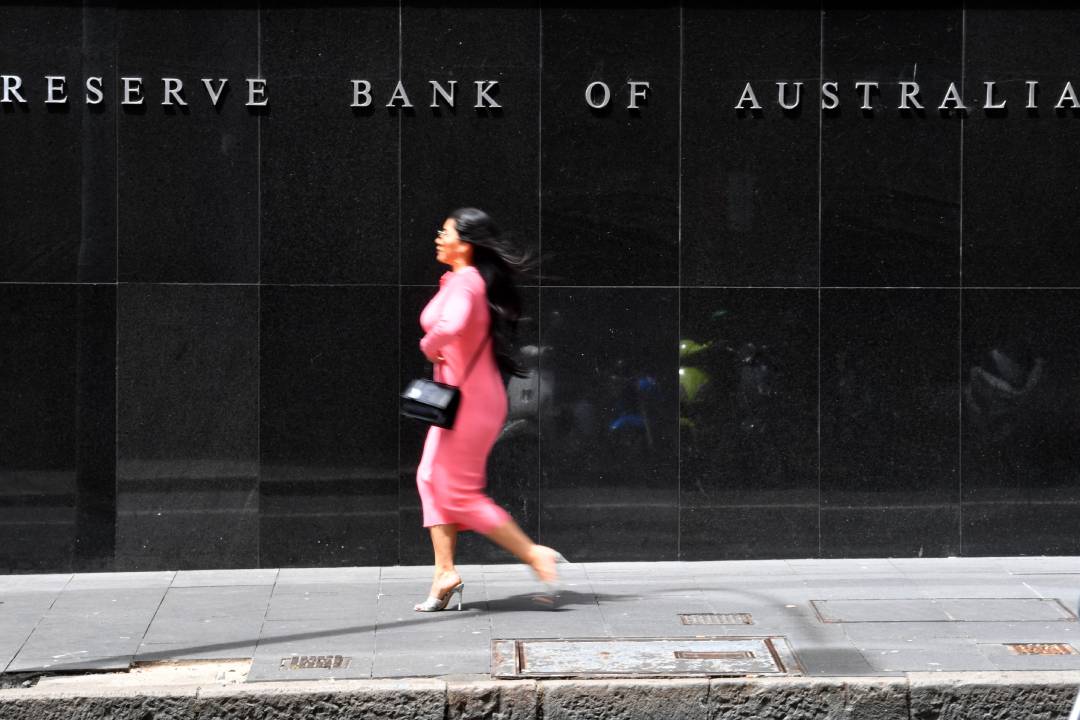
The Reserve Bank Board won’t touch interest rates settings on Tuesday, but there will be real interest in the accompanying statement. Monetary policy has shifted from stimulative to neutral and it won’t take much for a tightening bias from being adopted. The cash rate stands at a 49-year low of three per cent at a time when business investment is rebounding and the housing market is gaining momentum. If the sub-prime crisis has taught us anything, it is about the dangers of leaving rates too low for too long.
The latest economic growth figures will confirm Australia to be the only developed nation not to have gone into recession over the past year. With a few more pieces still to fall in place, it is likely that the economy grew by 0.7 per cent in the June quarter. Household construction, business investment, exports and government spending led the way forward in the quarter, held back by lower inventories.
In the US, the spotlight is clearly focussed on the August employment figures (non-farm payrolls) to be released on Friday. At this early stage, economists are tipping a 200,000 decline in jobs. While this is still a large drop in jobs, importantly it represents a major improvement over the last few months. Once job shedding ends, investors will have much more confidence about consumer spending and a durable economic recovery.
The week kicks off with New York and Chicago purchasing manager surveys on Monday. On Tuesday, data on car sales and construction is released alongside the ISM manufacturing index (reading of 50 expected). Data on factory orders and productivity is issued on Wednesday alongside the ADP survey of private sector employment and the minutes of the last Federal Reserve meeting. And the ISM services index is released on Thursday (reading of 55 expected).
With both the US and Australian profit-reporting seasons effectively over, investors will be groping for direction over the next few weeks. No doubt economic data will fill the void with investors looking for validation on some of the stretched valuations. But the next few months may also be punctuated by merger and acquisition activity. With the economy starting to turn, and up-to-date financials to hand, out-performing companies will need to quickly assess the opportunities in the current environment. Woolworths certainly wasn’t slow to act in expanding into hardware. And Chinese and Indian companies are also keenly eyeing opportunities in mining and energy sectors.
Yields on 90-day bank bills stand are just shy of six-month highs, standing at 3.34 per cent. The implied yield on September bank bill futures stands at 3.35 per cent with December bills at 3.84 per cent. Based on those figures, if the Reserve Bank was to lift rates over the next few months, it would be merely validating market-determined interest rates. And it may very well be that the Reserve Bank will look to be guided by market pricing to determine the best time to start its ‘normalisation’ process – lifting the cash rate back to around five per cent.
But pricing on the overnight indexed swap market is less aggressive. The OIS market suggests that a rate hike before Christmas is less than a 50 per cent chance at present.
Another guide to market thinking on rates is the spread between 10-year and three-year bond yields. This gap has narrowed from 157 basis points in June to a 10-month low of 63 basis points. When the first rate hike occurred in the last cycle, the yield gap was 47 basis points.
The Aussie dollar is very much stuck in its holding pattern of around US83-84 cents and within a broader range of US80-85 cents.
As more overseas investors realise that resource-hungry China and India will be driving the global economy in coming years, it will dawn on them that countries like Australia and Canada are the chief beneficiaries of the shift.
The price of lead is soaring on speculation that China will have to shut down production in response to reports of lead poisoning. Chinese state media has reported that children living near lead smelters have been affected by lead poisoning. In response, the top lead producing province of Henan has shut an estimated 240,000 tonnes of annual lead smelting capacity. The price of lead is at 12-month highs, up 142 per cent from December 2008 lows.
Important information:This content has been prepared without taking account of the objectives, financial situation or needs of any particular individual. It does not constitute formal advice. For this reason, any individual should, before acting, consider the appropriateness of the information, having regard to the individual’s objectives, financial situation and needs and, if necessary, seek appropriate professional advice.
Published: Monday, August 31, 2009
blog comments powered by Disqus