The Experts

Investor signposts - week beginning 4 October 2009
The big picture
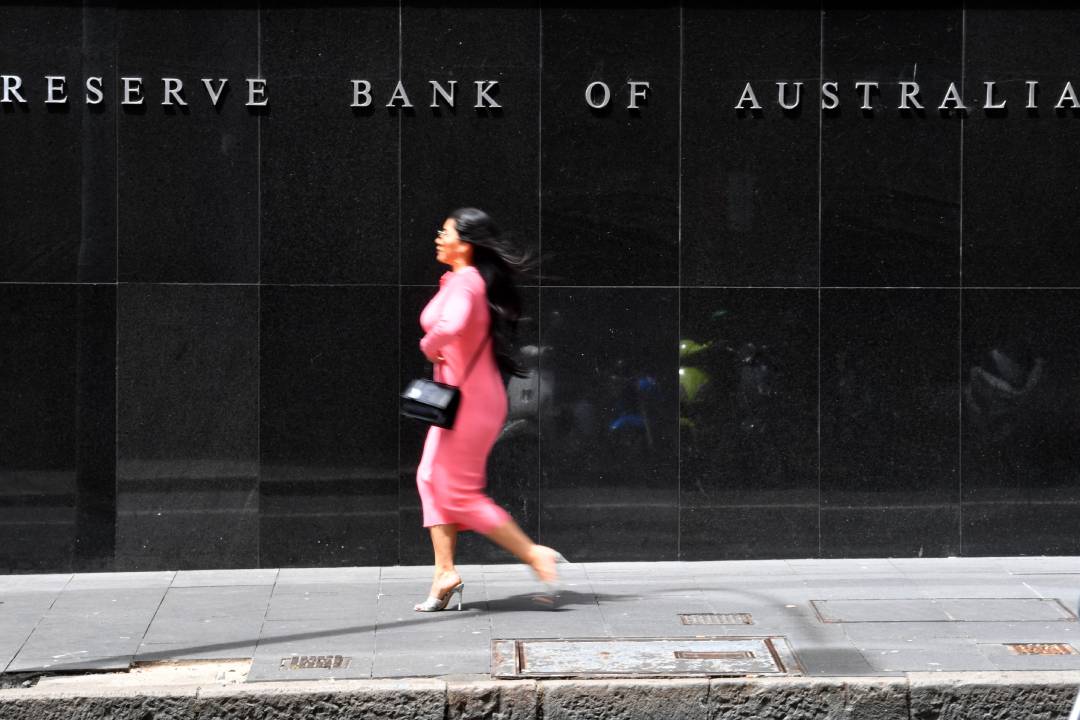
There’s no doubt that interest rates are again the hot topic on financial markets. It doesn’t seem that long ago when all the talk was about interest rate cuts. In fact, the last rate cut occurred just six months ago. But now discussion has shifted to rate hikes with a few forecasters actually expecting a move in the coming week.
There is no question that rates are going to go up; the only question is the timing of the first move. And that is important, because when the Reserve Bank moves, it will have kicked off a new cycle of rate movements with the aim of returning rates to a level more consistent with a ‘normal’ functioning economy. The Reserve Bank doesn’t lift rates just once – it will lift rates over two or three consecutive months and then sit back and assess the reaction. Then after a few more months of reflection it will start the process again.
Will it move next week? We wouldn’t rule it out, but see it as possibly a 25 per cent chance. Recent economic data has been encouraging – both here and abroad. But there are still a few risks. And with inflation well contained at present there is no harm in waiting another month or so to assess a little more information. In fact, the latest inflation data is released in three weeks time and the Reserve Bank has shown a preference in the past to look at the data before moving rate settings.
There isn’t one single factor prompting the Reserve Bank to lift rates, rather a range of indicators that suggest the economy is returning to normal. Retail spending has lifted; share and property markets have rebounded; firms appear to be hiring again; and global financial markets are more settled.
What factors could cause the Reserve Bank to stay on the interest rate sidelines a little longer? The Aussie dollar is one influence – the currency is the fourth strongest in the world this year and the solid gains are acting as a brake on tourism, manufacturing and rural sectors.
Certainly the tourism sector is under significant pressure at present. Room occupancy rates at hotels, motels and serviced apartments are at eight-year lows. Hotel takings from accommodation also recorded the biggest drop in eight years in the June quarter. The key reason is that more Australians are travelling overseas and fewer tourists are coming down under. In fact over 122,000 more Aussies travelled overseas in July than tourists coming our shores – the biggest imbalance in 33 years of records.
The Reserve Bank would also be mindful that the first home owners boost has been scaled back and would be keen to see the impact on the housing market. Then there are the divergent trends in retail spending. The Bureau of Statistics has indicated that spending at larger retail outlets is up almost 10 per cent on a year ago whereas sales at smaller retail sales are largely unchanged over the period.
There is never a ‘right’ time to change rate settings. But we believe that the Reserve Bank could wait another month or so for lifting rates. Certainly in most other countries, rate hikes are not on the radar screen.
The Reserve Bank Board meeting on Tuesday dominates the economic calendar for the coming week. But while the chances of a near-term rate hike have increased, most analysts believe that the Bank will wait a little longer before pulling the trigger.
If the Reserve Bank leaves rates alone as we expect, analysts will closely dissect the accompanying statement to get a sense of the timing for the first rate hike. But clearly a shift from the current ‘neutral stance’ to a ‘tightening bias’ would narrow the odds of a Melbourne Cup Day rate move.
Apart from the Reserve Bank Board meeting, there is plenty of economic data to digest. On Monday both the ANZ and Olivier job advertisement surveys are released while the Performance of Services index is released the same day. On Tuesday international trade data is issued with housing finance on Wednesday and the monthly employment report on Thursday. Treasury Secretary Ken Henry is expected to front the Senate Economics Committee on Friday.
Overall, the economic data should be encouraging but fall well short of indicating a return to stellar economic conditions. Job advertisements rose in August and another increase would signal that the job market has truly turned for the better. The trade balance may have narrowed from almost $1.6 billion to $600 million, driven in large part by a four per cent fall in imports. But exports will be watched carefully for the effects of a stronger dollar, especially as receipts have fallen in four of the last five months.
Home lending may have also softened in the latest month reflecting less demand for loans by first homebuyers. But while the value of loans probably fell by around one per cent, this would only be the second fall in 11 months.
The employment data will be a key test of the strength of the recovery. A rebound in jobs, or even just a small decline in hiring (as we expect), would signify that unemployment is close to peaking. Overall, CommSec expects that employment fell by 10,000 in September with unemployment ticking up from 5.8 per cent to 5.9 per cent. The Reserve Bank Governor expects unemployment to peak at ‘six point something’ and we share that view.
In the US, the economic calendar is sparsely populated. The ISM services index is released on Monday while consumer credit data is slated for Wednesday. Later in the week, wholesale inventories data is issued on Thursday with the trade balance on Friday.
A number of Federal Reserve presidents are scheduled to give speeches over the week with the main interest being any hints dropped about the timing of interest rate hikes. New York president William Dudley fronts the lectern on Monday with Kansas City president Thomas Hoenig giving speeches on both Tuesday and Thursday. Atlanta president Dennis Lockhart fronts the lectern on Friday.
So far, 2009 has been a much better year for global share markets. Of the 72 bourses monitored by CommSec, all except eight markets are higher compared with the start of the year. Leading the gains has been the Peruvian share market (up 115 per cent) followed by Russia (up 98 per cent), Sri Lanka (up 95 per cent) and Argentina (up 92 per cent).
Asian markets have performed well over 2009 with Indonesia up 82 percent, India up 73 per cent, Taiwan up 64 per cent, Thailand up 59 per cent and China and Singapore both up 52 per cent. Australia is in 43rd spot, up 30 per cent over 2009. The US Dow Jones is one of the laggards, in 62nd spot with a 10.7 per cent gain over 2009.
Financial markets are factoring in a rate hike by the end of the year. The overnight indexed swap (OIS) market places the chance of a rate hike next week at 18 per cent. But from there, the odds lift appreciably. The chance of a November rate hike is put at 50 per cent while a 25 basis point increase in rates in December is fully factored in. Cash rates are tipped to rise by 50 basis points over the next six months with rates expected to rise by 100 basis points over the coming year. Businesses are already facing higher rates with 90-day bills at 3.35 per cent.
The Australian dollar has been one of the strongest currencies in the world over the first nine months of the year. In fact, of 120 currencies monitored, the Australian dollar has recorded the fourth strongest gains so far in 2009. The strongest currency is the relatively minor Seychelles rupee, up 35 per cent since the start of the year. Next strongest has been the Brazilian real (up 24 per cent), followed by the South African rand (up 21 per cent) and then the Australian dollar (up 20 per cent).
Commodity currencies certainly dominate the top end of the currency leader-board on the expectation of global economic recovery and stronger commodity prices. In addition to the Brazilian real, South African rand and Australian dollar, the NZ dollar, Norwegian krona, Canadian dollar and Chilean peso have all recorded double-digit gains against the greenback
The Japanese yen has appreciated just over one per cent against the greenback over 2009 while the euro has gained around five per cent.
Important information:This content has been prepared without taking account of the objectives, financial situation or needs of any particular individual. It does not constitute formal advice. For this reason, any individual should, before acting, consider the appropriateness of the information, having regard to the individual’s objectives, financial situation and needs and, if necessary, seek appropriate professional advice.
Published: Monday, October 05, 2009
blog comments powered by Disqus